
Fantasy Football Wide Receiver Rankings 2026: Top 10 WRs With League-Winning Upsid
June 10, 2026
Fantasy Football RB Rankings 2026: Top 10 Running Backs to Draft This Season
July 22, 2026Fantasy Football Sleepers 2026: Top 10 League-Winning Players to Target in Your Draft


Finding the right fantasy football sleepers in 2026 is not about collecting random late-round names and hoping something works. It is about finding players whose talent, opportunity, depth-chart position, and draft cost do not match.
That gap between price and potential is where fantasy championships are won.
Every manager in your league can identify the obvious first-round stars. Anybody can draft a player after he has already become a household name. The real edge comes from identifying the next breakout before the rest of the market catches up. You want the running back who is about to take control of a backfield, the wide receiver whose target share is ready to explode, or the quarterback who can give you starter-level production without costing an early pick.
That is what this list is built to uncover.
These are the top 10 fantasy football sleepers for 2026, based on early average draft position, expanding roles, vacated touches, team investment, injury recovery, and the potential to produce far beyond current expectations. Some of these players can become weekly starters. A few have legitimate top-10 positional ceilings. Others are calculated upside bets who should be drafted as part of a deep, balanced roster rather than trusted as your only answer at the position.
This is also an important distinction: a sleeper does not always have to be an unknown player selected in Round 14. A sleeper can be a recognizable player whose market price is still too low. If you can draft a potential top-10 producer as the 20th or 30th player at his position, that is a sleeper. If you can select a possible workhorse running back in the fifth or sixth round, that is a sleeper. Value is determined by what you pay compared with what the player can become.
The fantasy football industry is full of consensus rankings that react to what already happened. This article is about anticipating what happens next.
Fantasy Football Sleepers 2026 Quick List
Here are the top 10 fantasy football sleepers for 2026:
- Luther Burden III, WR, Chicago Bears
- Quinshon Judkins, RB, Cleveland Browns
- Carnell Tate, WR, Tennessee Titans
- Bhayshul Tuten, RB, Jacksonville Jaguars
- Alec Pierce, WR, Indianapolis Colts
- David Montgomery, RB, Houston Texans
- Brian Thomas Jr., WR, Jacksonville Jaguars
- Emeka Egbuka, WR, Tampa Bay Buccaneers
- Tyler Shough, QB, New Orleans Saints
- Jadarian Price, RB, Seattle Seahawks
These players offer different types of fantasy value. Burden and Tate are ascending young receivers with expanding target opportunities. Judkins, Montgomery, Tuten, and Price have paths to significant rushing volume. Pierce and Thomas are discounted potential lead receivers. Egbuka has the talent and opportunity to become one of the biggest wide receiver values in fantasy football. Shough offers late-round quarterback stability and upside.
Watch the Top 10 Fantasy Football Sleepers Video:
Watch the podcast here: Top 10 Fantasy Football Sleepers
What Makes a Fantasy Football Sleeper in 2026?
A fantasy football sleeper is a player whose potential role and production are greater than his current draft cost suggests.
The word “sleeper” gets overused. Some analysts call every rookie a sleeper. Others call any player outside the first three rounds a sleeper. That is not specific enough. A real sleeper must have a believable path to outperforming his ADP.
That path usually comes from one of several developments. A veteran may leave and free up targets. A young running back may move from a backup role into a starting opportunity. A player may be recovering from an injury that has temporarily depressed his price. A rookie may enter a depth chart without a proven number one option. A talented receiver may be coming off a disappointing year and suddenly become much cheaper than he was one season earlier.
The goal is not to eliminate all risk. That is impossible. The goal is to make sure the potential reward is worth the risk.
That philosophy aligns with the CUDDY system. You want to consider consistency, upside, depth chart, durability, and youth. The best sleepers usually check at least three of those boxes, with upside and depth-chart opportunity being especially important. A player can be talented, but talent without touches does not help your fantasy roster. Opportunity has to meet ability.
1. Luther Burden III Fantasy Football Sleeper Outlook
Luther Burden III is one of the most exciting wide receiver sleepers in fantasy football for 2026 because his rookie numbers only tell part of the story.
Burden finished last season with 60 targets, 47 receptions, 652 receiving yards, and two touchdowns. Those numbers were respectable, but they were produced in a limited role. His involvement grew as the season progressed, and he began showing the explosiveness and after-the-catch ability that made him an attractive prospect entering the NFL.
The most important development for his 2026 outlook is the departure of DJ Moore. Moore accounted for 85 targets, 50 receptions, 682 receiving yards, and six touchdowns last season. Those opportunities do not simply disappear. Chicago will distribute them among several players, but Burden is positioned to earn a significant portion of that vacated volume.
Rome Odunze remains a major factor. He had 90 targets, 44 receptions, 661 yards, and six touchdowns last season, so this is not a situation where Burden suddenly becomes the only receiver on the field. The upside comes from the possibility that Burden becomes a featured option alongside Odunze rather than a secondary player buried behind two established veterans.
Burden’s late-season production is another reason to be interested. He became increasingly involved over the second half of the year and delivered a massive fantasy performance late in the season, scoring approximately 27 fantasy points in Week 17. One game does not guarantee a breakout, but it shows the ceiling available when the offense places the ball in his hands.
The Bears used second-round draft capital on Burden, and he remains a young, explosive player entering an offense that should be more comfortable in its second year under the current system. Caleb Williams also has another season of NFL experience, which should improve the timing and efficiency of the passing game.
Burden’s early draft cost places him around WR22 and roughly 42nd overall, depending on the platform. That price is not extremely cheap, but the potential return remains strong. You are drafting him as a low-end WR2 while hoping he emerges as a legitimate number one fantasy receiver in Chicago.
He is especially appealing to managers who prioritize running backs in the opening rounds. Rather than spending a first- or second-round pick on a wide receiver, you can build your running back foundation and then target Burden in the third or fourth round as a player whose role is still expanding.
The risk is target competition. Odunze and tight end Colston Loveland are not going away, and Chicago may still spread the ball around. However, the combination of vacated targets, youth, explosiveness, and increased playing time makes Burden one of the strongest fantasy football sleeper candidates for 2026.
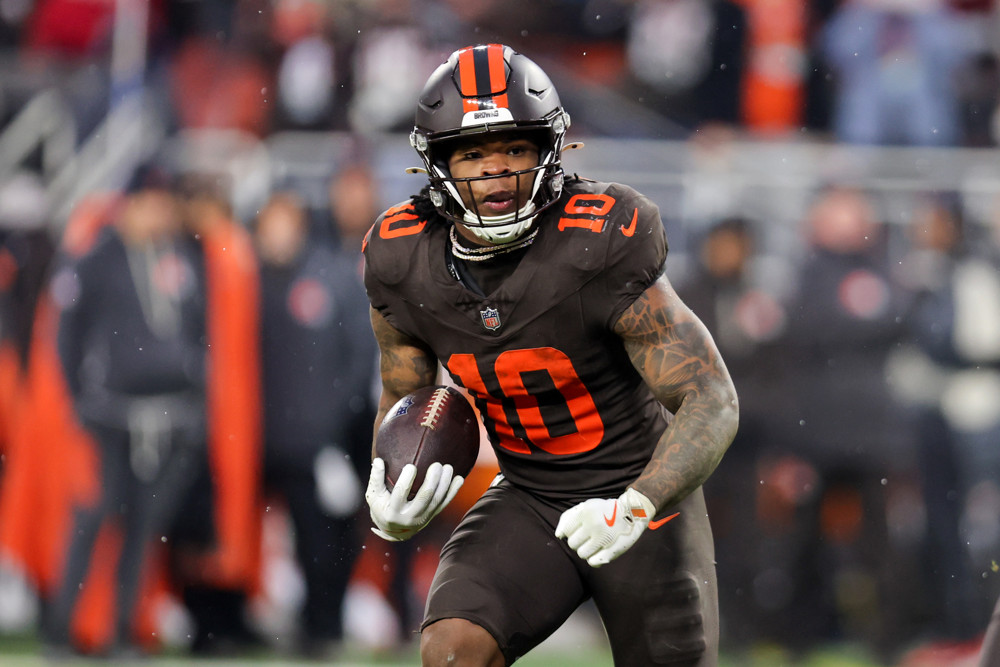
Judkins will eat in 2026. (Photo by Frank Jansky/Icon Sportswire)
2. Quinshon Judkins Fantasy Football Sleeper Outlook
Quinshon Judkins represents exactly the type of running back value fantasy managers should be hunting in the middle rounds.
Judkins handled 230 rushing attempts as a rookie, finishing with 827 rushing yards and seven touchdowns. His 3.6 yards per carry were not impressive, but context matters. Cleveland’s offense struggled, the offensive line was inconsistent, the quarterback situation was unstable, and Judkins suffered a serious fibula and ankle injury late in the season.
Despite those obstacles, he proved he could handle a workhorse-level rushing workload.
That is the foundation of the sleeper case. Judkins does not need to win a job or convince the coaching staff he can carry the ball 15 to 20 times per game. He already handled 230 attempts in only 14 games. The question is whether improved health and a slightly better offensive environment can increase his efficiency.
Early offseason reports have been encouraging. Judkins has been participating in team activities, sprinting, cutting, and working through drills. A fractured fibula and dislocated ankle are serious injuries, but they are not the same as an ACL tear. If Judkins enters training camp without restrictions and looks explosive, his ADP could rise quickly.
The Browns also did not make a major investment in another running back who should immediately threaten his workload. Dylan Sampson remains part of the backfield, but Judkins is still the high-capital player who already demonstrated he can lead the rushing attack.
Cleveland has attempted to strengthen other areas of the offense, including the offensive line and receiving corps. Any improvement in the passing game would help Judkins because defenses would have less freedom to crowd the line of scrimmage. He does not need the Browns to become an elite offense. He needs them to become competent enough to create more scoring drives and cleaner rushing lanes.
Judkins is being drafted around the fourth-to-sixth-round turn in many early formats, with an overall ADP around 60. That is valuable territory for a player with a realistic path to 240 or more rushing attempts.
The key is how you build around him.
Judkins should not necessarily be your only important running back. He fits beautifully as an RB3 in a robust-RB build or as part of a four-running-back core. You can secure two stronger backs early, add Judkins in the middle rounds, and give yourself another potential workhorse without relying on him to carry the entire roster.
His floor depends on health and offensive improvement. His ceiling is a top-15 or potentially top-10 running back finish if he reaches 1,000 rushing yards, improves his touchdown total, and adds receiving production.
That combination of price, role, youth, and projected volume makes Quinshon Judkins one of the best RB sleepers for fantasy football 2026.
3. Carnell Tate Fantasy Football Sleeper Outlook
Carnell Tate is the rookie wide receiver sleeper who could move dramatically up draft boards before the season begins.
Tate enters the NFL with an opportunity to become Tennessee’s leading receiver immediately. He is not joining a team with an established superstar commanding 150 targets. Calvin Ridley and the other Titans receivers provide experience, but nobody in that group should prevent a first-round rookie from becoming a major part of the offense.
Tate’s college production included 51 receptions, 875 yards, and nine touchdowns during his final season. At approximately 6-foot-2 and 192 pounds, he brings a strong combination of size, route-running skill, body control, and natural hands. His reported 4.5 speed may not make him the fastest player in the draft class, but forty-yard-dash speed does not always capture functional football speed.
What matters is whether a receiver can separate, locate open areas in zone coverage, win at the catch point, and consistently make himself available to the quarterback. Tate has shown those qualities.
Reports from offseason practices have also been encouraging. His ability to high-point the football and catch naturally away from his body gives him immediate red-zone potential. He has also been praised for finding soft areas in coverage and creating separation, two skills that can help a rookie earn early trust. The biggest uncertainty is Cam Ward.
Tate can be talented and open consistently, but the quarterback must deliver the football. Ward enters an important season and has plenty to prove. The Titans need him to become more consistent and efficient, and Tate may be the receiver who helps him take that step.
This creates a mutually beneficial situation. Ward needs a reliable number one receiver, and Tate needs a quarterback willing to feed him. If that connection develops quickly, Tate can outperform his current WR30 range and become a weekly fantasy starter.
His early ADP places him around the fifth round and approximately 63rd overall. That is a reasonable price for a potential team-leading receiver with first-round NFL draft capital.
There will be rookie volatility. Tate may have games where the offense struggles and his target total disappoints. That is part of drafting young receivers. The upside, however, is that he becomes Tennessee’s unquestioned top option and approaches 120 targets as a rookie.
A player with that type of role should not be drafted as WR30 for long.
Carnell Tate is one of the best fantasy football sleepers for managers who want a high-upside WR3 with the potential to become much more.
4. Bhayshul Tuten Fantasy Football Sleeper Outlook
Bhayshul Tuten is one of the most difficult sleepers to evaluate because his opportunity is more impressive than his rookie production.
Tuten finished last season with 83 rushing attempts for 307 yards, an average of 3.7 yards per carry. He scored seven total touchdowns, including five on the ground according to the figures discussed in the original breakdown. Those numbers do not prove that he can become an elite NFL running back, but the depth-chart situation makes him impossible to ignore.
Travis Etienne is no longer in Jacksonville, leaving a massive amount of work available in the Jaguars backfield. Etienne handled more than 260 rushing opportunities and produced over 1,100 rushing yards last season. That volume has to go somewhere.
Tuten will compete with Chris Rodriguez Jr. and LeQuint Allen Jr. for snaps and touches. Rodriguez can handle physical rushing work, while Allen has value in passing situations and pass protection. Jacksonville may use a committee rather than handing one player every opportunity.
That is the primary risk.
Tuten was a fourth-round pick, and later-round running backs often receive less patience than highly drafted players. A first-round running back usually gets repeated opportunities because the team has a major investment to protect. A fourth-round player must continue proving he deserves the role.
Still, Tuten has speed, explosiveness, and the ability to create plays in space. Jacksonville has discussed expanding the ways it uses him, including outside runs and more involvement in the screen and passing games. That type of usage would fit his strengths better than asking him to repeatedly grind between the tackles.
The sleeper case is ultimately based on the possibility that Tuten wins the largest share of a suddenly open backfield.
His early ADP places him around RB24, roughly 70th overall, and in the fifth-to-sixth-round range. That price is reasonable if you are drafting him as your RB4 or as a high-upside depth option. It becomes much riskier if you need him to be your RB2.
Tuten is not the same type of talent bet as Jahmyr Gibbs, Saquon Barkley, Omarion Hampton, or Jeremiyah Love. He was not drafted with the same capital, and he has not yet proven he can dominate NFL touches. What he does have is an opportunity.
Fantasy managers should draft the opportunity without ignoring the risk. If Tuten separates from Rodriguez and Allen during training camp, he could become one of the biggest risers of the summer. If the Jaguars commit to a three-player committee, he may be frustrating.
That makes Bhayshul Tuten a true sleeper: the price is affordable, the outcome is uncertain, and the potential reward is significant.

Even being paid as a WR1, Alec Pierce is a fantasy football sleeper in 2026 (Photo by David Rosenblum/Icon Sportswire)
5. Alec Pierce Fantasy Football Sleeper Outlook
Alec Pierce enters 2026 as one of the most interesting veteran wide receiver sleepers because the Colts have paid him and positioned him to lead their passing game.
Pierce finished last season with 84 targets, 47 receptions, 1,003 receiving yards, and six touchdowns. He barely crossed the 1,000-yard mark, but he did it on fewer than 50 receptions, demonstrating his ability to create chunk plays and stretch the field.
The departure of Michael Pittman Jr. creates an enormous opportunity. Pittman accounted for 111 targets last season, and those looks must be redistributed. Tyler Warren will command a significant role at tight end, but Pierce now has the clearest path to becoming the Colts’ leading wide receiver.
The Colts also made a major financial commitment to him. Teams do not pay wide receivers premium money without planning to feature them. The contract does not guarantee Pierce will suddenly become an elite alpha receiver, but it does guarantee that he will be given opportunities to prove he can handle that responsibility.
That distinction matters.
Pierce has generally profiled as a vertical receiver rather than a complete target-dominant number one. He has produced big plays, but the question is whether he can expand his route tree and become a consistent weekly volume option. If he remains dependent on deep targets, his fantasy scoring may be volatile.
The ankle injury is another concern. Pierce has dealt with the issue for an extended period and may not be ready for the opening weeks of the season. Drafting injured receivers can create unnecessary lineup problems, especially when the player’s expected absence is uncertain.
That is why Pierce is a value play rather than a player to reach for.
At approximately 74th overall, WR33, and a sixth-round ADP, you are not paying for guaranteed elite production. You are paying for the possibility that he becomes Daniel Jones’ primary wide receiver and absorbs a meaningful portion of Pittman’s vacated targets.
Pierce is not a perfect CUDDY player because the durability and consistency concerns remain. However, the upside and depth-chart opportunity are real.
If he enters the season healthy, he could become a strong WR3 with weekly WR2 upside. If the target total climbs over 110 and his deep-ball efficiency remains strong, another 1,000-yard season should be attainable.
Alec Pierce is a fantasy football sleeper because his price does not yet reflect the size of the opportunity in front of him.
6. David Montgomery Fantasy Football Sleeper Outlook
David Montgomery may not be the most exciting name on this list, but fantasy football is not a beauty contest. Volume, touchdowns, and role matter more than flash.
Montgomery spent the last several seasons playing behind one of the most explosive running backs in football. Jahmyr Gibbs became the alpha in Detroit, gradually reducing Montgomery’s workload. Even in that secondary role, Montgomery still finished last season with 158 carries, 716 rushing yards, a 4.5-yard average, and eight touchdowns. He also added 24 receptions for 192 yards.
Those are useful numbers for a player sharing a backfield with an elite talent.
Now Montgomery is in Houston, where the path to leading the backfield is much clearer. Woody Marks remains involved and will receive touches, but Montgomery has the experience, size, power, and proven goal-line ability to become the primary early-down runner.
The Texans’ investment and the offseason reports suggesting Montgomery will have a leading role make him intriguing at his current price. Houston also strengthened the offensive line and should have enough receiving talent to prevent defenses from focusing entirely on the run.
Montgomery’s fantasy profile has always been built on volume and touchdowns rather than explosive breakaway plays. He is not likely to average six yards per carry or lead the league in long runs. He wins through physical rushing, red-zone usage, and steady weekly involvement.
That type of player can become extremely valuable if drafted correctly.
Montgomery is being selected around RB21 and in the fifth-round range. If he becomes Houston’s primary runner and receives 220 or more carries, he can outperform that cost. A double-digit touchdown season is realistic if the offense creates enough red-zone opportunities.
There is some downside. Marks may earn more work than expected, Houston may rotate the backfield, and Montgomery is approaching the age when running back production can decline. This is not a youth-driven breakout.
It is a situation-driven value play.
Montgomery works best as an RB3 or part of a robust-RB roster. You do not need him to be your most explosive player. You need him to give you reliable touches, touchdown opportunities, and depth.
He may not win a highlight-reel contest, but he can help win fantasy matchups.
7. Brian Thomas Jr. Fantasy Football Sleeper Outlook
Brian Thomas Jr. is a classic post-hype sleeper.
The fantasy industry pushed Thomas aggressively after his explosive rookie season. He scored approximately 284 fantasy points, drew more than 130 targets, and looked like one of the next elite wide receivers in football.
Then the price skyrocketed, and regression followed.
Thomas fell to 91 targets, 48 receptions, 707 yards, two receiving touchdowns, and approximately 138 fantasy points during his second season. That was a massive decline from his rookie production and a painful result for managers who spent a first- or second-round pick on him.
Now the market has corrected too far in the opposite direction.
Thomas is being drafted around WR41, approximately 92nd overall, and in the seventh-to-eighth-round range. That is an enormous discount for a player who already proved he can command targets and produce at an elite level.
The Jacksonville situation is not perfect. Jakobi Meyers and Parker Washington will earn targets, and the offense has had internal questions surrounding Thomas’ role and future. There has also been speculation about whether he could eventually be moved. But those concerns are part of the reason he is affordable.
Thomas is still young, talented, and likely motivated to rebuild his market value. If Jacksonville intends to keep him, the Jaguars should feature him. If the team eventually wants to trade him, it also benefits from showcasing him and restoring his value.
The key is not expecting an automatic return to his rookie ceiling. Thomas remains a boom-or-bust player. His second-year decline demonstrated that one excellent season does not guarantee yearly dominance. At his new cost, however, you are no longer paying for perfection.
You can draft Thomas as a WR4 or upside bench receiver and allow the situation to develop. If he regains a role closer to his rookie usage, he can dramatically outperform his ADP. If the target competition remains crowded, your roster should not collapse because you selected him several rounds later than last year.
Fantasy football is often about buying talented players after the market becomes disappointed. Brian Thomas Jr. is exactly that type of 2026 sleeper.
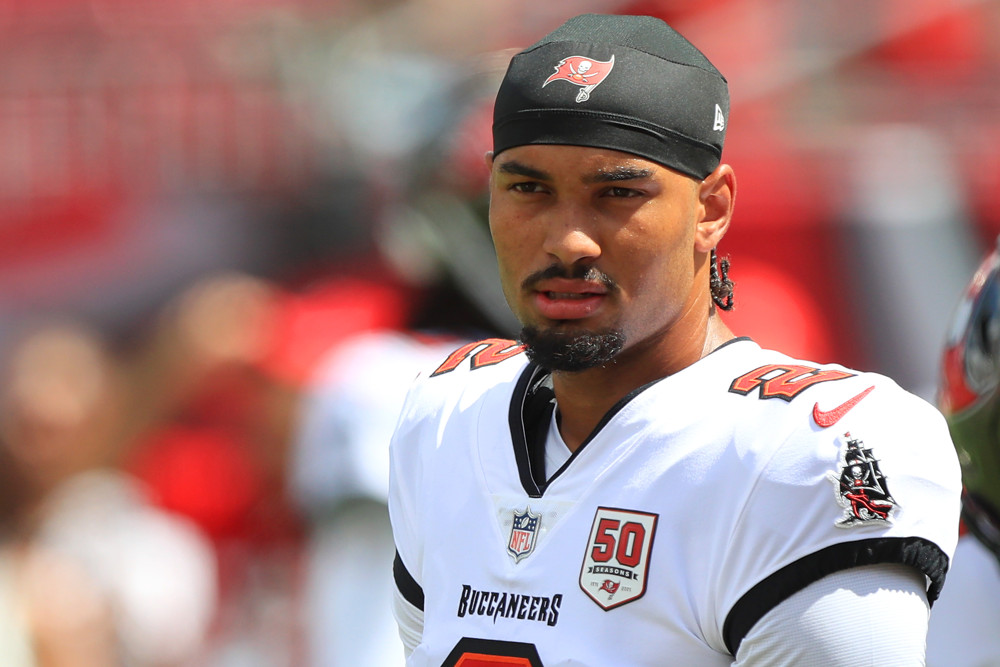
Emeka is amazing value! (Photo by Cliff Welch/Icon Sportswire)
8. Emeka Egbuka Fantasy Football Sleeper Outlook
Emeka Egbuka is not a traditional deep sleeper, but he may be one of the best value picks in the entire 2026 fantasy football player pool.
Egbuka saw 127 targets as a rookie, ranking among the league leaders despite playing in an offense that still included established veteran receivers. He converted those opportunities into 63 receptions, 938 yards, and six touchdowns.
The reception rate needs to improve, but the target volume is the most important part of the profile.
Targets are earned. A rookie does not accidentally see 127 passes. Egbuka proved that he can get open, earn quarterback trust, and become a major part of an NFL offense immediately.
Now his role is expanding.
Mike Evans is gone, and the Buccaneers did not replace him with another established alpha receiver. Egbuka has a direct path to becoming Tampa Bay’s clear number one option. Baker Mayfield is an aggressive, high-volume passer who is willing to feed his preferred targets, which gives Egbuka both a strong floor and an elite ceiling.
His current draft range is around WR22 and the third-to-fourth-round area. Some managers may argue that a third-round player cannot be called a sleeper. That misses the point.
Egbuka is a sleeper because his positional price does not match his realistic finish. He is being drafted as a low-end WR2 while possessing top-five wide receiver upside.
The comparison with Tee Higgins illustrates the value. Higgins has often peaked around 110 targets while operating behind Ja’Marr Chase. Egbuka saw 127 targets before fully becoming his team’s number one receiver. If his role grows and his catch efficiency improves, his statistical ceiling rises dramatically.
A season with more than 80 receptions, 1,200 receiving yards, and double-digit touchdowns is within his range of outcomes. Those numbers would place him among the elite wide receivers in fantasy football.
His ADP may rise throughout the summer, particularly if training camp reports continue to confirm that he is the centerpiece of the passing attack. Managers drafting early have an opportunity to secure him before the market fully adjusts.
Egbuka should not be viewed as merely a safe young receiver. He is a potential league winner available outside the opening two rounds.
That makes him one of the most important fantasy football sleepers for 2026.
9. Tyler Shough Fantasy Football Sleeper Outlook
Tyler Shough is one of the strongest late-round quarterback sleepers in fantasy football for 2026.
He finished last season as QB26 after playing only 11 games. His full-season numbers included 10 passing touchdowns and six interceptions, which do not immediately jump off the page. The more important part of his profile is how he performed once he became comfortable as the starter.
Shough produced a consistent late-season stretch. He scored approximately 17 fantasy points in Week 13, 21 in Week 14, 18 in Week 15, 17 in Week 16, and 22 points in both Weeks 17 and 18.
That consistency matters.
Rather than producing one random spike game surrounded by single-digit failures, Shough showed that he could deliver usable weekly fantasy production over an extended period. He became increasingly composed, operated the offense effectively, and helped New Orleans finish the season with momentum.
The Saints have also added more offensive support. Rookie Jordan Tyson brings upside at wide receiver, Travis Etienne adds another weapon to the backfield, and Chris Olave could return if he receives full medical clearance. The offense is not perfect, but it is more talented than the group Shough worked with during portions of his rookie season.
Shough also enters 2026 knowing the offense belongs to him. There is a major difference between fighting for a job during the season and preparing the entire offseason as the expected starter. He can work on timing with receivers, command the huddle from the beginning of camp, and develop within the system.
His ADP remains extremely affordable. Shough is around QB19 and approximately 120th overall, and he may go undrafted in many one-quarterback leagues.
That creates multiple ways to use him.
In superflex or two-quarterback formats, he is a valuable QB2 target who can provide a stable floor without requiring premium draft capital. In one-quarterback leagues, he can be selected as a backup with the potential to become a weekly streamer or more.
Shough may not have the rushing ceiling of the elite dual-threat quarterbacks, so his path to a top-five finish is limited. But he does not need to become a top-five quarterback to be valuable. If he provides consistent 18-to-22-point weeks at a QB19 price, he becomes an excellent return on investment.
Quarterback sleepers are often overlooked because the position is deep. That depth is exactly why managers should wait and target value.
Tyler Shough is one of the best values available.
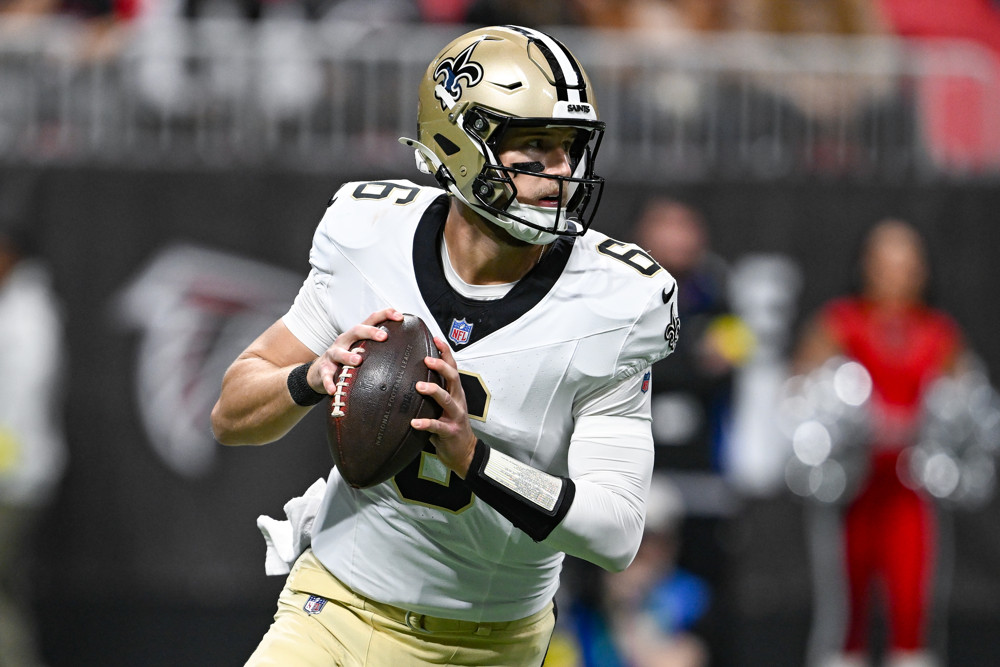
Tyler is great must-have breakout in 2026 (Photo by Rich von Biberstein/Icon Sportswire)
10. Jadarian Price Fantasy Football Sleeper Outlook
Jadarian Price is the running back sleeper with the combination of draft capital, opportunity, and upside that can change fantasy leagues.
Seattle selected Price with the 32nd overall pick in the first round of the 2026 NFL Draft. That level of investment is significant. NFL teams do not use first-round selections on running backs unless they plan to give those players meaningful opportunities.
Price enters a Seattle backfield that has undergone major changes. Kenneth Walker is gone, while Zach Charbonnet is recovering from a torn ACL and may miss a meaningful portion of the season. Even if Charbonnet returns earlier than expected, he may need time to regain full explosiveness and conditioning.
That gives Price an immediate opportunity to control the backfield.
The Seahawks also have Emanuel Wilson and George Holani, but neither player carries Price’s first-round investment or long-term upside. They may receive rotational work, particularly early in camp, but Price will be given every chance to earn the lead role.
Price’s college production requires context because he shared the Notre Dame backfield with Jeremiyah Love. He carried the ball 113 times for 674 yards and 11 touchdowns during his final college season, averaging roughly six yards per attempt. Over his career, he produced 1,682 rushing yards and 21 rushing touchdowns on 280 carries.
He also displayed major explosiveness as a kickoff returner, averaging more than 36 yards per return and scoring three return touchdowns during his college career.
Those special-teams numbers reinforce what appears on film: Price has excellent vision, sudden acceleration, and the ability to turn a crease into a long gain.
His physical profile includes approximately 4.49 speed at 5-foot-11 and 203 pounds. He is not the largest workhorse in the league, but he possesses enough size, contact balance, and explosiveness to handle a significant role.
Price is currently being drafted around RB26 and approximately 83rd overall, generally in the fifth-to-sixth-round range. That price may not last. If he works with the starters during training camp and Charbonnet remains limited, the fantasy market will react quickly. A first-round rookie running back with a clear path to September volume will not remain outside the top 20 at his position.
Price should be drafted as an RB3 or RB4 with the upside to become a weekly RB1 or RB2. Managers should not assume there will be zero committee involvement, but the opportunity is too strong to ignore.
Players such as Rhamondre Stevenson, Tony Pollard, RJ Harvey, and D’Andre Swift may currently be ranked ahead of Price on some platforms. Price has a cleaner combination of youth, investment, and upside than several of those veteran options.
He is not guaranteed to dominate. No rookie is guaranteed anything. But if he takes control of this backfield during Charbonnet’s recovery, Jadarian Price could become one of the defining fantasy football sleepers of 2026.
How to Draft These Fantasy Football Sleepers
The most important part of identifying sleepers is knowing how to use them within a complete draft strategy.
A sleeper should not become an excuse to ignore positional strength early. Finding Quinshon Judkins or David Montgomery in the fifth round does not mean you should enter the draft planning to avoid running backs until then. The middle rounds are unpredictable, and your targets may not reach you.
The better strategy is to build a strong foundation and then use sleepers to increase your depth and ceiling.
A robust-RB manager might begin with two running backs in the opening three rounds, add a receiver such as Luther Burden or Emeka Egbuka, and then select Judkins, Montgomery, Tuten, or Price as another potential starter. That gives the roster a backup plan for its backup plan.
At wide receiver, managers can use the depth of the position to their advantage. Rather than forcing multiple receivers early, you can target ascending players such as Burden, Tate, Pierce, Thomas, and Egbuka at different stages of the draft.
Shough is a different type of sleeper because quarterback strategy depends on format. He is more important in superflex leagues, but his late price also makes him useful as a backup in standard formats.
The goal is to combine safety and upside. Do not construct an entire roster out of volatile sleepers. Early picks should establish your weekly floor. Middle- and late-round sleepers should raise the ceiling.
Which 2026 Fantasy Football Sleeper Has the Highest Ceiling?
Emeka Egbuka may have the highest overall ceiling relative to his position and cost. He already commanded 127 targets as a rookie and now has a path to becoming Tampa Bay’s unquestioned number one receiver.
Jadarian Price may provide the greatest running back return if he earns control of Seattle’s backfield while Zach Charbonnet recovers. First-round draft capital and immediate opportunity create an exciting combination.
Quinshon Judkins may be the safest running back value because he already proved capable of handling 230 carries. His recovery and Cleveland’s offensive quality remain concerns, but the role is easier to project than some other middle-round backfields.
Brian Thomas Jr. carries significant volatility, but his rookie season demonstrated a ceiling most receivers available in the seventh or eighth round have never shown.
Fantasy Football Sleepers 2026 FAQ
Who are the best fantasy football sleepers for 2026?
The top fantasy football sleepers for 2026 include Luther Burden III, Quinshon Judkins, Carnell Tate, Bhayshul Tuten, Alec Pierce, David Montgomery, Brian Thomas Jr., Emeka Egbuka, Tyler Shough, and Jadarian Price. These players have opportunities to outperform their current draft positions because of expanded roles, vacated touches, team investment, or discounted prices.
Who is the best running back sleeper for 2026?
Jadarian Price is one of the highest-upside running back sleepers because Seattle selected him in the first round and Zach Charbonnet is recovering from an ACL injury. Quinshon Judkins is another strong option because he handled 230 carries as a rookie and is being drafted in the middle rounds.
Who is the best wide receiver sleeper for 2026?
Emeka Egbuka offers elite upside after seeing 127 targets as a rookie. With Mike Evans gone, Egbuka has a path to becoming Tampa Bay’s top receiver. Luther Burden III and Carnell Tate are also strong sleeper candidates because both young receivers could command significantly larger roles.
Is Brian Thomas Jr. a fantasy sleeper again?
Brian Thomas Jr. qualifies as a post-hype sleeper because his ADP has fallen sharply after a disappointing second season. He is now being drafted several rounds later than he was last year despite having already demonstrated elite fantasy upside as a rookie.
Should fantasy managers draft sleepers over proven veterans?
Sleepers should be selected when their potential return exceeds the veteran’s expected production at a similar price. Early in drafts, managers should still prioritize reliable roles and proven production. In the middle and late rounds, young players and discounted veterans with larger ceilings become more valuable.
Final Thoughts on the Top Fantasy Football Sleepers for 2026
Fantasy football sleepers are not magic. They are not random names pulled from the bottom of a rankings list. They are players whose circumstances are changing faster than the market is reacting.
Luther Burden III has a clearer target path after DJ Moore’s departure. Quinshon Judkins is recovering from injury after already proving he can handle workhorse volume. Carnell Tate could immediately become Tennessee’s top receiver. Bhayshul Tuten has a chance to claim a share of Jacksonville’s vacated backfield work. Alec Pierce has been paid and positioned to lead Indianapolis’ wide receivers. David Montgomery has escaped Jahmyr Gibbs’ shadow. Brian Thomas Jr. is available at a massive post-hype discount. Emeka Egbuka is ready to become Tampa Bay’s alpha receiver. Tyler Shough offers affordable quarterback stability. Jadarian Price has first-round draft capital and an immediate path to touches in Seattle.
Every player carries risk. That is why they are available at a discount.
The managers who win fantasy leagues are not the ones who avoid every uncertain situation. They are the managers who identify which risks are worth taking and build enough depth to survive when a pick does not work.
Draft proven players early. Build a strong running back foundation. Add wide receiver value instead of chasing inflated names. Target sleepers whose talent and opportunity are aligned.
Do not wait until the entire fantasy industry agrees. Once everyone agrees, the value is gone.
Think ahead of the market. Trust your research. Draft with conviction.
That is the Lion Mentality, and that is how you dominate fantasy football in 2026. Grab 16 Rounds to be ahead of the sheep in your leagues as well!